


- Etudiant
- International
- Study at UTT
- About France, Troyes and its region
About France, Troyes and its region
Troyes and its region
Troyes Champagne Métropole and the Conseil Départemental de l'Aube support student welcome and integration at UTT!The city of Troyes, located in the Grand Est region and about one and a half hour from Paris, is known in France and across Europe for many reasons. For a time, it was the regional seat of power of the Counts of Champagne. For several years now, it has been recognized as a City of Art and History because it has preserved its medieval heritage.
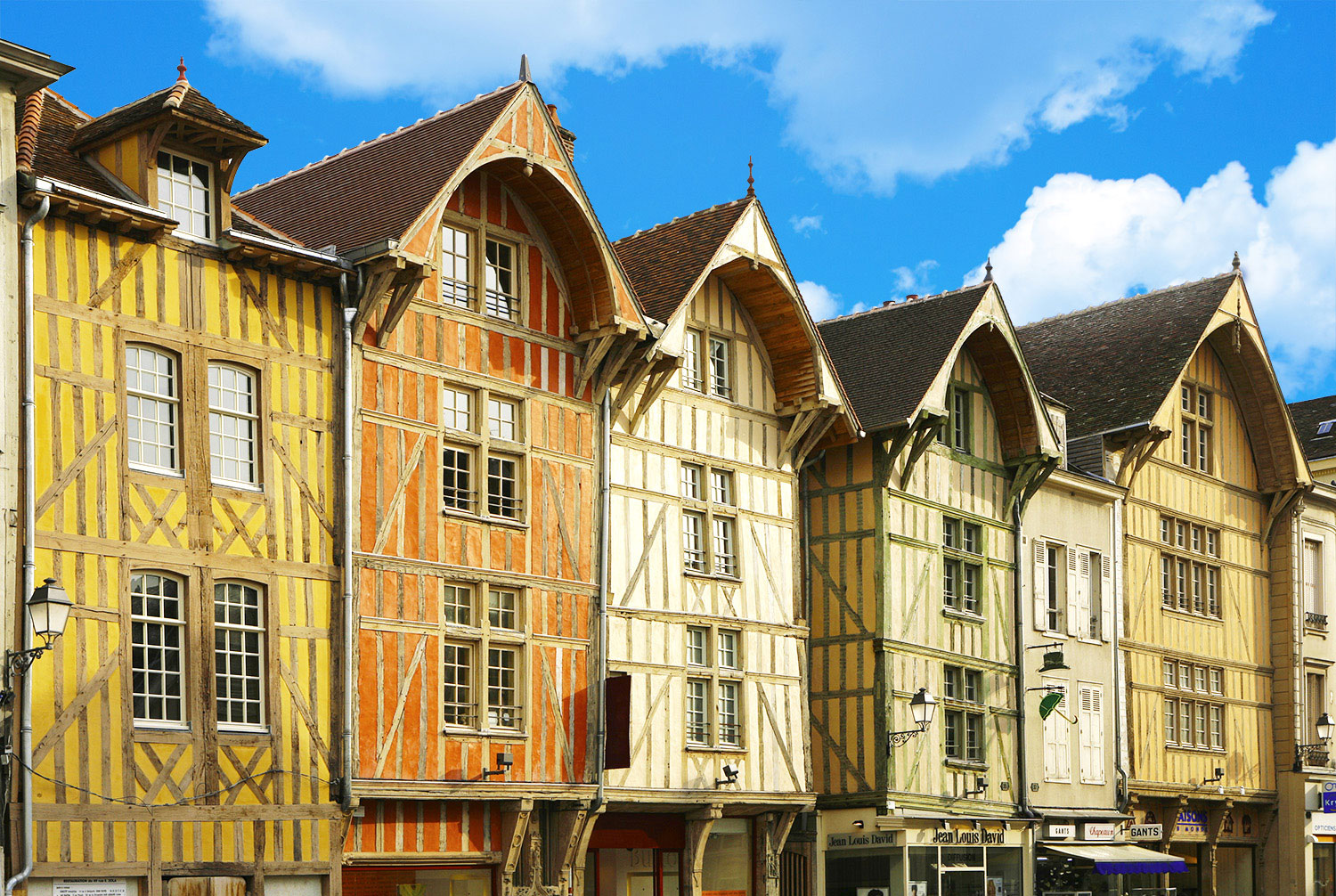
The old town has retained its medieval architecture, with its half-timbered houses and Champagne checkerboard façades made of alternating dark red and chalk bricks. The historic city center is known locally as the “Champagne Cork” because of its unusual shape. Today, Troyes has 42 listed historic buildings, including ten churches and one cathedral.
It is also famous for its stained-glass windows, which can be admired in many buildings throughout the city as well as in the “Cité du Vitrail”, a museum dedicated to this delightful art.
Moreover, Troyes is renowned for its textile, leather, and printing industries. The city is at the origin of several well-known brands such as Lacoste and Petit Bateau. Troyes remains today France’s textile capital, both for production and marketing, notably through its numerous factory outlets concentrated on two sites on the outskirts of the city.
Furthermore, Troyes is also famous for its gastronomy, particularly its andouillette, the Prunelle de Troyes liqueur, and the nearby Champagne vineyards.
Navigation
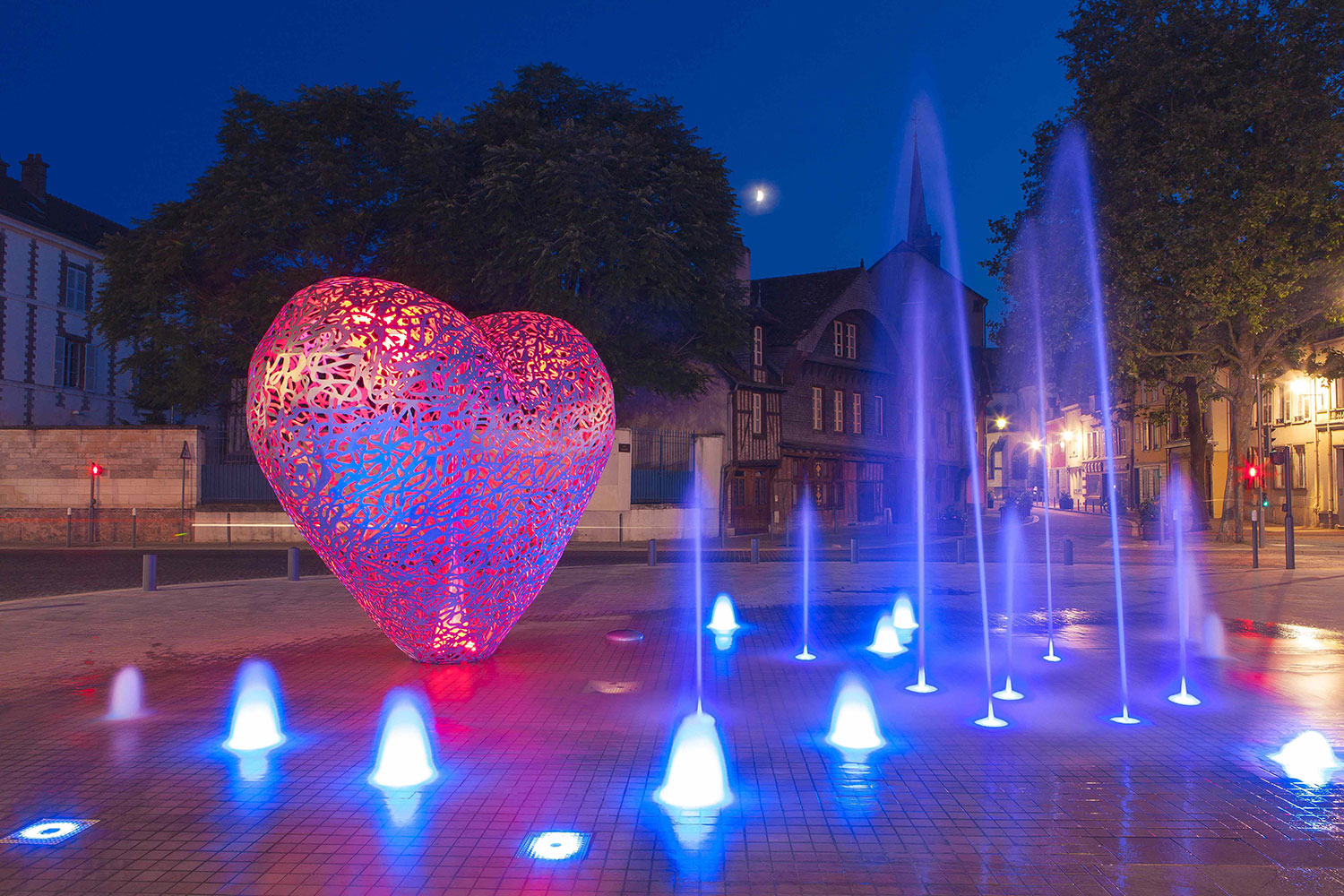
 Present day Troyes (175,000 inhabitants including its suburbs) has a vibrant cultural and artistic life, a thriving economy and many sporting activities.
 Troyes remains today France’s textile capital both for production and marketing of textile products, notably through its numerous factory shops concentrated on two sites on the outskirts of the city.
The Aube region can pride itself on having attracted companies who are either national, European or world leaders in their various fields.
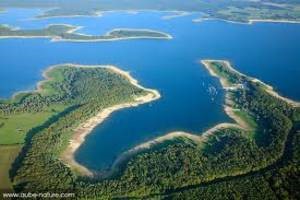
While large enough to offer all the facilities of a major commercial and cultural center, Troyes still manages to be a friendly, easy-going and safe place to live. Troyes is also close to some of the most beautiful countryside in the region: one third of the department is forested and has the highest number of artificial lakes in Europe.
The Aube region is also famous for its champagne and wines: its vineyards produce a quarter of all Champagne production. ‘La Route du Champagne’ takes you through charming villages and beautiful countryside.
Troyes, with its friendly and welcoming atmosphere, is the ideal place to be a student. Finding somewhere to live is relatively easy and the prices are reasonable.
You can find online a comprehensive map of the city, both downtown as well as the city surroundings.
About France
France is located in Western Europe and has a population of more than 69 million inhabitants. Its capital is Paris, which is world-famous for its history, gastronomy, and culture. Every year, it attracts millions of visitors from around the world.Territory
With a surface area of 550,000 km², metropolitan France is about twice the size of the United Kingdom. It is the largest country in Western Europe.Apart from Paris, the other major cities are Lyon, Marseille, Toulouse, Nice, Nantes, and Strasbourg. Metropolitan France is administratively divided into 13 regions and 96 departments.
France counts many mountain range like Les Alpes, Les Pyrénées or Les Vosges and Rivers like La Seine, La Loire or La Garonne.
Also France has one ocean, The Atlantic Ocean and two seas ; La Manche and the Mediterranean sea.
Climate
The climate in France is quite varied but generally temperate, typical of Western Europe-overall slightly warmer than the UK and slightly cooler than Spain. France (like most of Western Europe) has four distinct seasons.
Religion
There is no official religion in France ; it is a secular republic. Today, 51% of people declare that they have no religion. However, approximately 29% identify as Catholic, 10% as Muslim, and 9% as Protestant.
Money
France's currency is the Euro, and most garages, hotels and shops in France accept credit cards, though may not always accept swipe cards without a microchip.
Food
French people love to eat. People usually take time for lunches and dinners. French food culture is wide and you will find specific food for each region in France. For example, specific food in Troyes will be the andouillette and the Chaource cheese.The "baguette" is the famous French bread stick, which can be found in the local "boulangeries" (=bakeries). But do not confuse the "boulangerie" with the bread-counter in a supermarket! Indeed, the pre-frozen "fresh-baked" bread counters in supermarkets are not even allowed, by law, to call themselves "boulangeries".
Then there is wine. France is one of the world's great wine producing countries, and a country with a vast range of wines.
Good to know
Foreign visitors in France are sometimes surprised to find themselves faced with closed doors, on reaching a museum or a famous monument. So it is not a bad idea, before visiting France, to learn what is closed in France, and when? On Sundays, public holidays and holiday periods in general, shops, museums, businesses and public services may be closed.mise à jour le 27 mars 2026